There is something deeply satisfying about taking a raw piece of wood and transforming it into something functional, beautiful, or both. Whether you are a complete beginner picking up a hammer for the first time or a seasoned craftsperson looking for a quick weekend build, diy wood projects small offer the perfect entry point into the world of woodworking. These compact builds require less material, take up minimal shop space, and often come together in just a few hours. In this comprehensive guide, we will walk you through everything you need to know about starting and mastering small-scale woodworking — from the best materials and essential tools to detailed project ideas ranked by skill level.
Why Small DIY Wood Projects Are the Perfect Starting Point
Starting a full-size furniture build can feel intimidating. Large projects demand expensive lumber, specialized joinery techniques, and significant studio space. Small diy wood projects eliminate nearly every barrier that keeps people from picking up a saw. The cost of materials stays low, mistakes become learning opportunities rather than expensive disasters, and the sense of accomplishment you get from finishing a compact build in a single sitting is genuinely addictive. Beyond the practical benefits, small wood crafts sharpen your fundamental skills — measuring, cutting, sanding, and finishing — which transfer directly to larger, more complex builds over time.
Many professional woodworkers actively encourage newcomers to begin with miniature and small-scale projects because the tight tolerances force you to develop precision and patience early on. When the piece is only six inches long, a poorly cut joint is immediately visible. This attention to detail builds habits that will serve you well for years.
Essential Tools and Materials for Small Woodworking Projects
You do not need a fully equipped garage workshop to start building small wood crafts. The beauty of compact DIY projects is that they require surprisingly few tools. Here is a practical starter list:
- Hand saw or jig saw — for making straight and curved cuts
- Wood glue and clamps — essential for joining pieces securely
- Sandpaper in multiple grits (80, 120, 220) — for smoothing surfaces
- Measuring tape and combination square — for accurate dimensions
- Drill with small bits — for pilot holes and assembly
- Finishing supplies — such as polyurethane, wax, or natural oil
Best Wood Types for Small DIY Projects
Choosing the right material makes a significant difference in the outcome of your small wood projects. Each species offers distinct grain patterns, hardness levels, and price points that suit different skill levels and aesthetic goals.
| Wood Type | Hardness | Best For | Price Range |
| Basswood | Soft | Beginner carving and painting | Budget-friendly |
| Pine | Soft | Shelves, coasters, decorative boxes | Budget-friendly |
| Cedar | Medium | Outdoor small crafts, aromatic boxes | Moderate |
| Walnut | Hard | Premium cutting boards, jewelry boxes | Higher cost |
| Maple | Hard | Durable kitchen utensils, game boards | Moderate to high |
| Cherry | Medium-Hard | Elegant small furniture, keepsake boxes | Moderate to high |
For your first few diy wood crafts, basswood and pine are excellent choices. They are forgiving to work with, widely available at local hardware stores, and affordable enough to allow plenty of experimentation without financial stress.
Easy Small DIY Wood Projects to Start With
Not every project needs to be a showpiece. Some of the most rewarding small woodworking projects are simple, functional, and surprisingly elegant. Here are categories of builds arranged by difficulty, so you can match your current skill set with the right challenge.
Beginner-Friendly Small Wood Project Ideas
- Floating wooden shelves — Cut a short piece of pine or poplar, sand it smooth, attach a hidden French cleat, and mount it on the wall. These compact shelves display plants, candles, or small decor items beautifully.
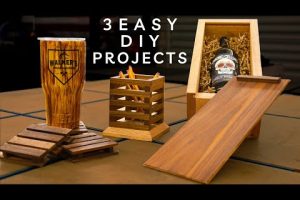
- Wooden coasters — Glue together thin strips of contrasting woods, trim to size, and seal with polyurethane or beeswax. Coasters are ideal for practicing straight cuts and edge finishing.
- Birdhouses from scrap lumber — Even imperfect cuts look charming on a birdhouse, making this one of the most forgiving small diy wood projects for absolute beginners.
- Simple wooden spoon carving — Using just a carving knife and a basswood block, you can create a functional kitchen utensil in under an hour.
Intermediate Small Wood Projects
Once you have mastered basic cutting, gluing, and finishing, it is time to level up your small woodworking projects. Intermediate builds introduce joinery techniques and more refined finishing methods.
- Jewelry boxes with dovetail joints — Dovetails are one of the most respected joinery methods in woodworking, and small boxes are the perfect practice canvas.
- Cutting boards from hardwood scraps — Gluing up edge-jointed strips of walnut, maple, or cherry into a rectangular blank teaches you about wood movement and grain orientation.
- Miniature tool organizers — These compact wooden racks fit on a workbench and hold chisels, files, and small hand tools neatly.
- Small picture frames with splined miters — Mitered corners reinforced with spline keys add both structural strength and a decorative touch that elevates any small wood craft.
Advanced Small Wood Projects for Experienced Builders
Even seasoned woodworkers find deep enjoyment in miniature and small-scale builds because the complexity scales up even when the physical size scales down. Advanced small diy wood projects often incorporate inlay work, bent wood techniques, or precision joinery that would be too time-consuming on a full-size piece.
- Miniature wooden chests with brass hardware — These intricate builds require precise measurements, careful sanding, and attention to the smallest finishing details.
- Fidget cubes and wooden puzzles — Woodworking becomes an exercise in tolerances when every millimeter matters, as is the case with interactive small wood crafts.
- Pen turning on a mini lathe — Small spindle turning projects teach balance, tool control, and finish application in a compact format.
Comparison: Easy vs. Intermediate vs. Advanced Small Wood Projects
Choosing the right project depends on your current experience, available time, and desired outcome. The table below compares key factors across three difficulty levels of diy wood projects small.
| Factor | Easy | Intermediate | Advanced |
| Skill Level Required | None to minimal | Basic cutting and gluing | Joinery and finishing expertise |
| Estimated Build Time | 1–3 hours | 3–8 hours | 8–20+ hours |
| Tool Requirements | Hand saw, sandpaper, glue | Add drill, clamps, square | Add lathe, router, chisels |
| Material Cost | $5–$15 | $15–$40 | $30–$100+ |
| Best Wood Types | Pine, basswood | Walnut, maple, cherry | Exotic hardwoods, figured grain |
| Learning Value | Fundamentals of measurement | Joinery and grain matching | Precision and artistic expression |
Expert Tips for Successful Small DIY Wood Projects

Over the years, experienced woodworkers have developed a set of habits and strategies that consistently produce better results with small builds. Here are the tips that separate a mediocre small wood project from a truly exceptional one.
- Measure twice, cut once — always. This old adage matters even more when working with small pieces because there is almost no room for error. A single wrong cut can waste an entire project’s worth of material.
- Invest in quality sandpaper. Cheap sandpaper wears out quickly and leaves scratches that become visible under finish. Progress through grits systematically: 80, 120, 180, and finally 220 for a silky-smooth surface.
- Let your wood acclimate. Small pieces are especially susceptible to warping and cracking if the moisture content does not match your workshop environment. Store your lumber indoors for at least 48 hours before cutting.
- Use painters tape for clean glue lines. Applying tape along joints before gluing makes cleanup effortless and prevents squeeze-out from ruining your carefully sanded surfaces.
- Finish is everything on small pieces. Because small wood crafts have less surface area to hide imperfections, a high-quality finish — whether oil, wax, or lacquer — makes an enormous visual difference.
- Keep a project journal. Writing down measurements, techniques, and lessons learned for each small woodworking project builds your personal knowledge base and accelerates your growth as a craftsperson.
Frequently Asked Questions About Small DIY Wood Projects
What are the easiest DIY wood projects small for someone with zero experience?
The easiest entry point is a simple wooden coaster or a small floating shelf. Both projects require only a hand saw, sandpaper, and wood glue. You can complete them in under two hours with no prior experience, and they teach foundational skills like measuring straight lines, making controlled cuts, and applying a smooth finish. Start here, build confidence, and then gradually move on to more involved small wood crafts.
What is the best wood for small woodworking projects on a budget?
Pine and basswood are the top choices for budget-conscious builders. Pine is widely available at any home center, cuts cleanly with basic tools, and accepts stain and paint beautifully. Basswood is slightly softer, which makes it ideal for carving and detailed small diy wood projects. Both materials are typically priced under five dollars per board foot, keeping your total project cost well under fifteen dollars.
Can small wood projects be profitable or sold online?
Absolutely. Small diy wood crafts have a strong market on platforms like Etsy, Amazon Handmade, and local craft fairs. Items such as handmade cutting boards, carved spoons, custom jewelry boxes, and miniature wall shelves consistently attract buyers who appreciate the personal touch of handmade goods. Many woodworkers start with small projects specifically because the low material cost and quick build time make them ideal products to sell without significant upfront investment.
What tools are absolutely necessary for completing small woodworking projects?
At a bare minimum, you need a hand saw or jig saw, a set of sandpaper ranging from 80 to 220 grit, wood glue, a measuring tape, and a pencil. If you want to expand your capabilities, adding a power drill, a combination square, and a few bar clamps will open up a world of compact wood builds that are both stronger and more refined. You do not need a table saw or expensive machinery to create beautiful small wood projects.
How do I prevent small wooden pieces from splintering during cuts?
Splintering is one of the most common frustrations in small woodworking projects. The best prevention techniques include using painter’s tape along the cut line, which holds the wood fibers together as the saw passes through. Additionally, using a sharp blade or bit, cutting slowly, and supporting the piece on a stable surface with scrap wood underneath will dramatically reduce tear-out. For the cleanest results on small pieces, consider using a fine-tooth scroll saw blade rather than a standard wood-cutting blade.
Conclusion: Start Building Today
There has never been a better time to dive into diy wood projects small. Whether you are drawn to the meditative rhythm of hand carving, the precision of joinery, or the creative satisfaction of designing your own small wood crafts from scratch, compact woodworking offers a rich and rewarding path for makers of every skill level. The projects in this article give you a clear roadmap — from your very first coaster to an advanced miniature chest — with each build building on the skills you developed in the last. Gather your tools, pick a project that excites you, and start building today. The only thing standing between you and a beautiful handmade piece is the decision to begin.