If you have been searching for DIY small wood projects that are both rewarding and achievable, you are in the right place. Small-scale woodworking offers an incredible entry point for beginners while still providing creative challenges for seasoned craftspeople. Whether you want to build functional home décor, custom organizers, or simply develop your woodworking skills without investing in expensive materials, small wood projects deliver maximum satisfaction with minimal commitment. In this guide, we will walk you through everything from beginner-friendly builds to intermediate projects that will sharpen your craft and elevate your space.
Why DIY Small Wood Projects Are Worth Your Time
Small woodworking projects are more than just a way to pass the time. They serve as a practical training ground for developing essential skills like measuring, cutting, sanding, and finishing. Unlike large furniture builds that require significant planning, clamping setups, and workshop space, small wood projects can be completed on a kitchen table or a compact workbench. The shorter build times mean you see results quickly, which keeps motivation high and encourages continuous learning. Additionally, these projects allow you to experiment with different wood species, joinery techniques, and finishing methods without the financial pressure of wasting expensive lumber.
There is also a deep sense of satisfaction that comes from creating something tangible and useful. A hand-built cutting board or a custom wall shelf becomes a conversation piece and a reminder of your growing abilities. The growing community around small woodworking projects and easy wood projects online proves that people crave hands-on creativity in an increasingly digital world.
Best Beginner Small Wood Projects to Start With
If you are brand new to woodworking, starting with simple builds that require minimal tools and basic skills is the smartest approach. Below are some of the most popular beginner woodworking ideas that deliver professional-looking results.
1. Wooden Coaster Set
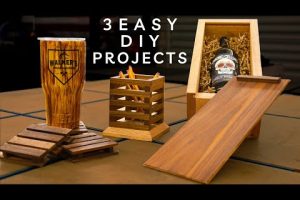
Coasters are arguably the simplest small DIY projects you can tackle. You only need a single board of hardwood like oak, walnut, or maple, a saw, sandpaper, and finish. Cut squares or circles, sand to a smooth 220-grit finish, and apply food-safe mineral oil or polyurethane. This project teaches you fundamental skills including straight cuts, edge sanding, and even basic wood burning for decorative patterns.
2. Floating Wall Shelf
A floating shelf is one of the most functional simple wood crafts you can build. It requires a single piece of lumber cut to size, a few wall brackets hidden inside, and a coat of stain or paint. This project introduces you to precise measurement, pocket hole joinery, and wall mounting techniques that are transferable to larger builds.
3. Plant Stand
Building a small wooden plant stand is an excellent way to practice angled cuts and assembly. A basic stand consists of a top platform and four legs angled outward for stability. This project can be completed in a single afternoon using scrap lumber, making it one of the most budget-friendly wood craft projects available.

Intermediate Small Wood Projects to Level Up Your Skills
Once you have completed a few beginner builds, it is time to challenge yourself with projects that introduce more complex techniques. These intermediate small woodworking projects will push your abilities while remaining manageable in scope.
1. Wooden Jewelry Box
A jewelry box requires dovetail joints or finger joints, a lid with a hinge, and a polished interior finish. This project teaches precision joinery and attention to detail. You can customize the interior with felt lining and dividers, making it a highly personal woodworking gift idea for friends and family.
2. Bench Dog Workbench Attachment
While this is a small build, a bench dog or bench hook dramatically improves your workshop functionality. It involves precise drilling and mortising, giving you hands-on experience with router use and dado joints. Many woodworkers consider this a rite of passage for anyone serious about small DIY projects.
3. Wooden Picture Frame
Building custom picture frames introduces miter cuts and corner clamping techniques. You can experiment with different wood species and contrasting splines in the corners for a stunning visual effect. Custom frames also make excellent handmade gifts and sellable items at craft fairs.
Essential Tools and Materials for Small Woodworking

You do not need a full professional workshop to start building DIY small wood projects. A focused set of tools and materials will cover the vast majority of small builds. Here is what you need to get started.
| Tool/Material | Use in Small Projects | Budget Range |
| Hand saw or miter saw | Cutting lumber to exact dimensions | $20 – $150 |
| Random orbit sander | Smooth finishing on all surfaces | $40 – $120 |
| Drill/driver set | Drilling holes and driving screws | $30 – $100 |
| Clamps (bar and spring) | Holding pieces during glue-up | $15 – $40 |
| Wood glue (Titebond III) | Strong permanent joints | $8 – $12 |
| Sandpaper (120–220 grit) | Surface preparation and smoothing | $5 – $15 |
| Finish (oil, stain, or lacquer) | Protection and visual enhancement | $10 – $25 |

When choosing wood for your small woodworking projects, hardwoods like poplar, birch, and maple are excellent choices for beginners because they are affordable and work beautifully with hand and power tools. Softwoods like pine are great for practice but can be prone to denting and splitting. As your skills grow, consider experimenting with walnut, cherry, or white oak for premium results.
Pro Tips and Expert Recommendations
To get the most out of your small DIY projects, keep these expert tips in mind:
- Always measure twice and cut once. Even small mistakes waste material and time. Use a quality combination square and marking gauge for precision.
- Sand in stages. Start with 120-grit sandpaper and progress through 150, 180, and finally 220 grit. Skipping grits leaves visible scratches under finish.
- Test finishes on scrap wood first. Every wood species absorbs stain differently. Apply your chosen finish to a scrap piece before committing to your final project.
- Invest in sharp tools. Dull blades and bits tear wood fibers instead of cutting cleanly, leading to rough surfaces and extra sanding work.
- Join a community. Online forums, local woodworking clubs, and social media groups dedicated to easy wood projects provide inspiration, troubleshooting advice, and moral support.
Another powerful strategy is to maintain a project journal. Document each build with photos, notes on what worked, and what you would change next time. Over weeks and months, this journal becomes an invaluable reference that tracks your skill progression and helps you plan future woodworking projects for beginners and beyond.
Common Mistakes to Avoid in Small Woodworking
Even experienced builders sometimes fall into traps when working on small-scale builds. Here are the most common mistakes and how to avoid them:
- Using the wrong wood thickness. Thin stock is prone to warping and breakage. Always check the specifications and choose stock at least ½ inch thick for structural pieces.
- Skipping dry assembly. Before gluing anything, dry-fit all your pieces to confirm alignment and identify issues early.
- Rushing the finishing process. Apply thin, even coats and allow proper drying time between coats. Rushing finish leads to drips, bubbles, and uneven color.
- Ignoring wood grain direction. Cutting against the grain causes splintering and tearout. Always cut with the grain whenever possible, especially on decorative edges.
- Overcomplicating the design. Some of the most beautiful wood craft projects succeed because of their simplicity. Let the natural beauty of the wood speak for itself before adding excessive embellishments.
Where to Find Free Plans and Inspiration
The internet is packed with resources for DIY small wood projects. Websites like Woodworking for Mere Mortals, Ana White, and Fine Woodworking offer free downloadable plans with detailed step-by-step instructions. YouTube channels dedicated to small-scale woodworking provide video walkthroughs that are especially helpful for visual learners. Pinterest and Instagram are also goldmines for trending project ideas, seasonal builds, and creative variations on classic designs. Bookmarking a few trusted sources ensures you always have fresh woodworking project ideas ready to go.
Conclusion
DIY small wood projects are one of the most accessible and rewarding ways to develop woodworking skills, create beautiful home items, and enjoy the calming benefits of hands-on craftsmanship. Whether you are a complete beginner picking up a hand saw for the first time or an intermediate builder looking to refine your joinery, the projects outlined in this guide provide a solid foundation for growth. Start simple, learn from each build, and gradually increase the complexity of your projects. The woodworking community is incredibly supportive, and every completed build — no matter how small — is a step forward on your creative journey. Grab some wood, gather your tools, and start building today.
FAQ
What are the easiest DIY small wood projects for absolute beginners?
The easiest projects include wooden coasters, simple picture frames, key holders, and small plant stands. These builds require only basic cutting, sanding, and finishing skills. Most can be completed in under two hours using a single board of lumber and a handful of common tools.
What wood is best for small DIY projects?
For beginners, poplar, birch plywood, and soft maple are excellent choices because they are affordable, readily available, and easy to work with. As you gain experience, hardwoods like walnut, cherry, and white oak provide superior beauty and durability for small woodworking projects that you want to display or gift.
What tools do I need to start small woodworking projects at home?
A basic setup includes a hand saw or miter saw, a drill/driver, a random orbit sander, bar clamps, wood glue, sandpaper, and finishing supplies. You do not need a table saw or planer to begin. Many easy wood projects are entirely doable with just hand tools and a cordless drill.
How can I sell small wood projects I make at home?
Small wood craft projects like cutting boards, jewelry boxes, custom frames, and decorative signs sell well on Etsy, at local craft fairs, and through social media marketplaces. Focus on clean craftsmanship, consistent quality, and unique designs that stand out from mass-produced alternatives.
How long does it take to complete a small DIY wood project?
Most beginner projects can be completed in one to three hours, while intermediate builds like jewelry boxes or picture frames may take half a day to a full weekend including drying time for finishes. The key advantage of small wood projects is that you can start and finish a build in a single session.