DIY woodworking crafts have become one of the most rewarding creative outlets for makers, hobbyists, and homeowners looking to build something tangible with their own hands. Whether you are a complete beginner picking up a hand saw for the first time or an experienced woodworker refining your joinery techniques, the world of homemade woodworking projects offers endless opportunities for personal expression, skill development, and functional home improvement. Unlike buying mass-produced furniture or décor, crafting your own wood pieces allows you to choose every material, dimension, and finish, resulting in items that carry genuine character and tell a story. This comprehensive guide walks you through everything you need to know about starting and advancing in DIY woodworking crafts, from essential tools and beginner-friendly projects to advanced techniques that will elevate your craftsmanship to the next level.
Why DIY Woodworking Crafts Have Exploded in Popularity
The resurgence of interest in homemade wood crafts is no coincidence. In an era dominated by digital screens and disposable consumer goods, people are craving hands-on creativity and the satisfaction of making something real. Woodworking offers a tactile, meditative escape that connects you with natural materials and traditional craftsmanship. Social media platforms like Pinterest, Instagram, and YouTube have amplified this trend, showcasing stunning homemade wood projects that inspire millions of viewers to pick up a tool for the first time. Beyond the aesthetic appeal, DIY wood crafts provide significant cost savings compared to purchasing custom furniture or artisan goods. A single weekend project can replace an expensive store-bought shelf, cutting board, or decorative wall piece, all while building a transferable skill set you will use for life.
Essential Tools and Materials for Getting Started
Before diving into any DIY woodworking project, you need the right tools and materials. Investing wisely in quality basics will save you frustration and ensure better results from the start. You do not need a fully equipped garage workshop to begin; many successful woodworkers started with just a handful of essential hand tools and a small workbench.
Must-Have Hand Tools for Beginners
Hand tools form the foundation of any woodworking setup and are perfect for learning fundamental techniques. These tools give you precision and control that power tools sometimes lack:
- Chisels (1/4 inch, 1/2 inch, and 3/4 inch sizes)
- Hand saw or Japanese pull saw for clean crosscuts
- Block plane for smoothing and shaping edges
- Woodworking clamps in multiple sizes
- Marking gauge and combination square for accurate measurements
- Marking knife for precise layout lines
- Sandpaper assortment (80, 120, 220, and 320 grit)

Power Tools That Transform Your Workshop
Once you are comfortable with hand tools, adding a few key power tools will dramatically increase your efficiency and the complexity of projects you can tackle:
- Cordless drill and driver — the single most versatile power tool for any woodworker
- Random orbital sander — produces a flawless smooth surface quickly
- Circular saw or track saw — handles straight cuts on full sheets of plywood and lumber
- Jigsaw — perfect for curved cuts and decorative shapes
- Router — opens up edge profiles, dado cuts, and decorative patterns
Easy DIY Woodworking Crafts for Beginners
Starting with simple projects builds confidence and teaches core skills like measuring, cutting, sanding, and finishing. These beginner-friendly homemade wood crafts require minimal equipment and can be completed in a single afternoon or weekend:
- Floating wooden shelves — a practical entry-level project that uses basic cuts and simple brackets or concealed French cleats. These shelves add functional storage and a warm aesthetic to any room.
- Wooden picture frames — miter cuts at 45 degrees introduce you to precision angle work while producing a beautiful finished product you can gift or display immediately.
- Cutting boards and serving trays — glue-up projects using hardwood strips teach you about grain alignment, clamping pressure, and food-safe finishing techniques like mineral oil application.
- Plant stands and pot holders — small-scale projects that let you experiment with joinery methods like doweling or pocket screws without a major time investment.
- Custom coasters and trivets — use scrap wood, contrasting species, or resin inlays to create unique tabletop protectors that make excellent gifts.
The key to beginner success is choosing projects that focus on straight cuts, simple assembly, and forgiving tolerances. You are building muscle memory and understanding wood behavior, not yet attempting flawless dovetail joints. Embrace imperfections as part of the learning journey.
Intermediate Woodworking Projects That Build Real Skills
Once you have mastered basic cuts, sanding, and simple assembly, intermediate DIY woodworking crafts challenge you to develop tighter tolerances, stronger joinery, and more refined finishing techniques. These projects bridge the gap between beginner craft and serious woodworking:
- Bookshelves with dado joints — cutting precise dados for shelf slots teaches you to work with a router or table saw while producing professional-looking storage furniture.
- Bench with mortise and tenon joints — this classic joint is the cornerstone of traditional woodworking and builds your ability to cut tight-fitting connections by hand or with a router template.
- Wall-mounted coat rack with custom hooks — combines creative design with practical functionality, allowing you to experiment with shaping and bending wood techniques.
- Wooden jewelry box with dovetail drawers — introduces you to hand-cut or machine-cut dovetails, one of the most respected and visually impressive joints in all of woodworking.
- Live-edge coffee table — working with natural wood edges teaches you about slab flattening, epoxy resin filling, and balancing organic shapes with functional design.
At the intermediate stage, focus on developing consistent accuracy. Use story sticks, test pieces, and dry assemblies before applying glue. These habits separate hobbyists from craftspeople who produce repeatable, high-quality results.
Advanced Woodworking Crafts for Seasoned Makers
For experienced woodworkers, DIY woodworking crafts become an avenue for artistic expression and mastery of complex techniques. Advanced projects demand patience, specialized tools, and a deep understanding of wood science and design principles:
- Hand-cut dovetail chests — producing through-dovetails and half-blind dovetails entirely by hand represents the pinnacle of traditional craftsmanship.
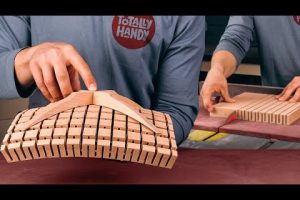
- Curved furniture using steam bending — shaping wood strips through steam or lamination techniques allows you to create flowing, organic forms that rigid boards cannot achieve alone.
- Inlaid and marquetry projects — embedding different wood species or materials into a surface creates intricate patterns and stunning visual depth.
- Carved decorative panels — relief carving or chip carving transforms a flat panel into a three-dimensional work of art, requiring specialized gouges and significant practice.
- Multi-functional furniture with mechanical elements — build drop-leaf tables, hidden compartment desks, or transformable pieces that showcase engineering creativity alongside woodworking skill.
Comparing Wood Types for DIY Woodworking Crafts
Choosing the right wood species is one of the most important decisions in any woodworking project. Different woods offer varying levels of hardness, grain character, workability, and cost. The table below compares the most popular choices for homemade wood crafts:
| Wood Species | Hardness (Janka) | Best For | Cost Level | Workability |
| Pine | 380–870 lbf | Beginner shelves, rustic furniture, painted projects | Low | Excellent |
| Oak (White) | 1,350 lbf | Tables, benches, mission-style furniture | Medium | Good |
| Walnut | 1,010 lbf | Gourmet cutting boards, furniture, decorative pieces | High | Very Good |
| Maple (Hard) | 1,450 lbf | Cutting boards, butcher blocks, modern furniture | Medium-High | Moderate |
| Cherry | 950 lbf | Fine furniture, heirloom pieces, jewelry boxes | High | Very Good |
| Basswood | 410 lbf | Carving, relief work, beginner hand-tool practice | Low-Medium | Excellent |
Hardwoods like walnut, cherry, and maple produce the most visually striking results and are ideal for pieces meant to last generations. Softwoods like pine are affordable and forgiving, making them ideal for practice and rustic-style projects. When selecting lumber for homemade wood crafts, always inspect boards for warping, cracking, and insect damage before purchasing.
Expert Tips and Common Mistakes to Avoid
Even experienced woodworkers fall into bad habits. Here are practical recommendations that will save you time, material, and frustration:
- Measure twice, cut once — but also test on scrap. Every saw blade has a kerf (width of the cut) that removes material. Test your cuts on offcuts before committing to your project pieces.
- Invest in sharp tools. Dull blades and chisels tear wood fibers instead of slicing them cleanly, leading to splintering and rough surfaces that are difficult to sand out.
- Let wood acclimate to your workshop environment. Wood purchased from a lumber yard may have been stored in a humid warehouse. Let it sit in your shop for several days before cutting to minimize warping after assembly.
- Sand progressively. Always move from coarse grit (80) to fine grit (320) in incremental steps. Skipping grit levels leaves scratches that become visible under finish.
- Do not rush the glue-up. Take your time aligning parts and applying even clamp pressure. Once glue sets, correcting misalignment is extremely difficult without damaging the piece.
- Avoid using green or wet wood for indoor projects. Lumber with high moisture content will shrink and crack as it dries, ruining your finished piece within months.
Frequently Asked Questions
What are the best DIY woodworking crafts for people with no prior experience? Beginners should start with projects that require minimal tools and forgiving tolerances, such as floating shelves, wooden picture frames, basic cutting boards, or simple plant stands. These projects teach fundamental skills like measuring, straight cutting, sanding, and applying finish without overwhelming you with complex joinery or precision demands.
What is the most cost-effective way to set up a beginner woodworking workspace at home? Start with hand tools like a Japanese pull saw, a set of chisels, a block plane, clamps, and a measuring square. Use a sturdy workbench or even a thick plywood sheet on sawhorses as a temporary surface. Purchase lumber from local hardwood dealers or home improvement stores, and look for discounted or reclaimed wood to keep material costs low while you build your skill level.
Which wood species are best for beginner homemade wood crafts and why? Pine and basswood are the top choices for newcomers because they are inexpensive, widely available, and easy to cut, sand, and shape with basic tools. Pine offers a rustic, character-filled grain that looks beautiful with simple oil or stain finishes, while basswood’s softness makes it ideal for carving practice and detailed hand-tool work.
How long does it typically take to complete a beginner DIY woodworking craft project? Most beginner-level projects like cutting boards, picture frames, or small shelves can be completed in a single weekend or about four to six hours of focused work spread across two sessions. More involved projects like a basic bookshelf or bench may take two to three weekends depending on complexity, drying time for finishes, and your current skill comfort level.
What safety precautions should I follow when doing homemade woodworking crafts at home? Always wear safety glasses when cutting, sanding, or routing wood. Use hearing protection with power tools, and a dust mask or respirator when sanding or working with exotic woods that produce irritating dust. Keep your workspace clean and free of clutter to prevent tripping hazards, and never work with tools when you are tired or distracted. Secure your workpieces with clamps or vises whenever possible to keep your hands away from cutting edges.
Conclusion
DIY woodworking crafts represent far more than a hobby — they are a pathway to creativity, self-sufficiency, and deep personal satisfaction. From your very first straight cut to your most complex hand-cut dovetail, every project builds your skill, your confidence, and your connection to one of humanity’s oldest and most meaningful crafts. Whether you are building simple shelves to organize your home, crafting a cutting board for a loved one’s kitchen, or pushing yourself toward advanced furniture making, the world of homemade wood projects rewards patience, practice, and genuine passion for working with your hands. Start with the basics, invest in quality tools and materials, embrace mistakes as learning opportunities, and watch as your woodworking journey transforms raw lumber into beautiful, functional art that will last for generations.