


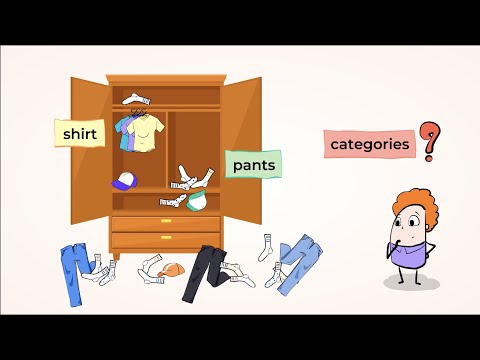
When you stop and think about it, everything around us can be sorted, grouped, and organized into categories of things. From the moment you walk into a grocery store and see products arranged by type to the way your brain instantly recognizes a dog as different from a desk, categorization is one of the most fundamental processes in human cognition and communication. Whether you are a student trying to improve your writing, a business owner organizing product lines, or simply someone who loves understanding how the world works, mastering the art of categorizing things opens up a powerful way to think clearly and communicate effectively. In this guide, we will explore the different categories of things, why they matter, and how you can apply them in everyday life and professional settings.
What Are Categories of Things?
A category of things is essentially a grouping of items, concepts, or entities that share common characteristics, features, or attributes. Categories exist everywhere — in nature, in language, in science, in commerce, and in our daily decision-making. They help us simplify the complexity of the world by placing objects, ideas, and experiences into recognizable groups. Think of it like sorting a massive pile of LEGO bricks by color, size, or shape before you start building something meaningful. Without that initial sorting, the task becomes overwhelming.
The concept of categorization has deep roots in philosophy, with ancient Greek thinkers like Aristotle debating how to classify living organisms and abstract concepts. Today, categorization spans disciplines including psychology, linguistics, data science, marketing, and education. Understanding categories of things gives you a mental framework that makes learning faster, problem-solving more efficient, and communication sharper.
Why Understanding Categories of Things Matters
You might wonder why spending time thinking about categories is worth your effort. The answer lies in the practical benefits they deliver across every area of life.
- Improved organization: Categories help you arrange physical spaces, digital files, and even your thoughts in a logical order.
- Better communication: When you group things clearly, you make it easier for others to understand your message without confusion.
- Faster decision-making: Categorization allows you to quickly filter options and focus on what is relevant.
- Enhanced learning: Our brains naturally store new information by linking it to existing categories, making recall easier.
- SEO and content strategy: For writers and marketers, understanding topic categories helps create content that ranks well and reaches the right audience.
Whether you are organizing a warehouse inventory, writing a research paper, or planning a website’s information architecture, the power of well-defined categories cannot be overstated.
Major Types of Categories of Things
There are several ways to divide the world into meaningful groups. Each system offers a different lens through which to view reality. Let us explore the most important ones in detail.
Tangible vs. Intangible Categories
This is perhaps the most fundamental division in the world of categories. Tangible things are physical objects you can touch, see, and measure. Examples include furniture, vehicles, food, and clothing. Intangible things, on the other hand, cannot be physically handled. Think of ideas, emotions, software, services, and intellectual property.
Understanding this distinction matters more than it might seem at first glance. Businesses selling tangible goods deal with inventory, shipping, and storage. Businesses selling intangible things deal with delivery, licensing, and intellectual protection. Mixing these up in your content or business model creates confusion.
Natural vs. Man-Made Categories
Another powerful way to classify things is by their origin. Natural categories include elements, animals, plants, minerals, weather phenomena, and ecosystems. These things exist independently of human intervention. Man-made categories cover everything humans have created, from smartphones and buildings to laws, languages, and artworks.
This distinction becomes especially useful in sustainability discussions, education, and product development. Consumers increasingly want to know whether the things they purchase come from natural sources or are artificially manufactured, which directly influences buying behavior and brand perception.
Living vs. Non-Living Categories
One of the earliest categories humans learned to identify is the difference between living and non-living things. Living things exhibit characteristics like growth, reproduction, metabolism, and response to stimuli. Animals, plants, fungi, and microorganisms all fall into this group. Non-living things include rocks, water (in its pure form), machines, and buildings.
However, this category gets interesting at the edges. What about viruses? Are they living or non-living? What about artificial intelligence — does it respond to stimuli in ways that blur the line? These gray areas show that categories of things are not always rigid boxes but often spectrums with overlapping boundaries.
How Things Are Classified: A Comparison of Systems
Different fields use different classification systems, and understanding the most common ones helps you choose the right framework for your needs.
| Classification System | Domain | How It Works | Example |
| Linnaean Taxonomy | Biology | Groups organisms by shared physical traits and evolutionary lineage | Kingdom, Phylum, Class, Order, Family, Genus, Species |
| Dewey Decimal System | Library Science | Assigns numeric codes to subjects for library organization | 800s for Literature, 500s for Science |
| Product Taxonomy | E-Commerce | Groups products by type, brand, use case, and audience | Electronics > Smartphones > Android Devices |
| Parts of Speech | Linguistics | Classifies words by their grammatical function | Nouns, Verbs, Adjectives, Adverbs |
| Numerical Classification | Mathematics | Groups numbers by properties like divisibility and type | Integers, Rational Numbers, Prime Numbers |
Each of these systems demonstrates that categorization is not one-size-fits-all. The best classification method depends entirely on your purpose and audience.

Advanced Ways to Think About Categories of Things
If you are ready to go beyond the basics, there are more nuanced approaches to categorization that professionals use every day. Hierarchical categorization organizes items from broad groups to increasingly specific sub-groups. Think of it like a tree: the trunk is the main category, the branches are sub-categories, and the leaves are individual items. A category like “Food” might branch into “Fruits,” which then branches into “Citrus Fruits,” which further divides into “Oranges,” “Lemons,” and “Limes.”
Fuzzy categorization acknowledges that not everything fits neatly into one group. Some things belong partially to multiple categories. A whale, for example, is not a fish by strict biological classification, yet it lives in the ocean and is commonly associated with marine life. Fuzzy logic and set theory offer mathematical tools for handling these overlaps.
Polythetic categorization is another powerful concept. Instead of requiring every item in a category to share one defining feature, it allows items to share a cluster of features, with no single feature being absolutely necessary. This mirrors how humans actually think in practice — we rarely use strict definitions when sorting the world around us.
Practical Tips for Using Categories of Things Effectively
Now that you understand the major systems and approaches, here are some expert recommendations you can apply immediately.
- Start broad, then narrow down. Always begin with the largest, most inclusive category and work your way toward specificity. This prevents you from getting lost in irrelevant details.
- Use consistent criteria. When creating your own categories, make sure every item within a group meets the same standard. Mixing criteria leads to confusion and poor organization.
- Allow for overlap when it makes sense. Rigid boundaries sometimes fail in the real world. Letting items belong to more than one category can reflect reality more accurately.
- Reassess periodically. Categories are not permanent. As new information emerges or needs change, your classification system should evolve with them.
- Test your categories with others. If someone else cannot understand your categories quickly, they are probably too complex or poorly defined.

Frequently Asked Questions
What are the three main ways things can be categorized?
The three most widely recognized ways to categorize things are by physical nature (tangible vs. intangible), by origin (natural vs. man-made), and by function or purpose (tools, entertainment, education, etc.). Each approach gives you a different perspective on the same collection of items.
How does categorization relate to search engine optimization?
Search engines rely on categorization to understand and rank content. When you organize your website into clear topical clusters and use semantic keyword variations, you signal to search engines that your content covers a subject thoroughly and in a structured way. This increases your chances of ranking for featured snippets and rich results.
Can categories of things overlap with each other?
Absolutely. Many real-world items belong to more than one category simultaneously. For instance, a smartphone is both a man-made object and a tangible product, and it also falls into the category of communication tools. Recognizing these overlaps helps you think more flexibly and accurately about how things relate to one another.
What is the difference between a category and a classification system?
A category is a single group defined by shared characteristics, while a classification system is the entire framework or method used to create and organize multiple categories. Think of a category as one drawer in a filing cabinet, and the classification system as the entire cabinet with its labeling scheme.
Why do children learn categories before they learn to read?
Categorization is a foundational cognitive skill that develops early in human life. Before children can read written words, they already sort objects by color, shape, size, and function. This mental sorting builds the neural pathways that later support language acquisition, literacy, and abstract reasoning. It is one of the strongest predictors of academic success across all subjects.
Conclusion
Categories of things are far more than a simple academic exercise. They are the invisible scaffolding that supports how we learn, communicate, organize, and make decisions every single day. From the basic divisions between tangible and intangible to the sophisticated fuzzy and polythetic models used by data scientists and philosophers, understanding how to categorize effectively is a skill that pays dividends in virtually every domain of life. Whether you are building a website, writing content, managing a business, or just trying to keep your home organized, the principles of thoughtful categorization will serve you well. Start by mastering the major systems outlined in this article, experiment with overlapping and hierarchical models, and remember that the best categories evolve as your understanding deepens.