


The world of kitchen design has undergone a dramatic transformation in recent years, and one of the most exciting advancements driving that change is AI kitchen design. What once required weeks of manual planning, costly consultations, and countless trips to showrooms can now happen in a fraction of the time — with stunning results. Whether you are a homeowner dreaming of a complete kitchen remodel or a professional designer looking to streamline your workflow, artificial intelligence is reshaping the way we approach kitchen spaces. This guide dives deep into how AI kitchen design works, the best tools available, and why this technology is becoming the gold standard for modern kitchen planning.
What Is AI Kitchen Design?
At its core, AI kitchen design refers to the use of artificial intelligence algorithms and machine learning models to create, optimize, and visualize kitchen layouts. Unlike traditional design methods that rely heavily on human intuition and manual measurements, AI-powered kitchen planning tools analyze spatial data, user preferences, ergonomic principles, and even current interior design trends to generate highly personalized designs. These systems can suggest cabinet placements, recommend countertop materials, optimize workflow zones, and produce photorealistic renderings — all within minutes.
The technology behind AI kitchen design leverages computer vision, generative design, and natural language processing. This means the software can interpret a simple sketch, a photograph of an existing space, or even a voice command to produce a comprehensive layout proposal.
How AI Kitchen Design Differs From Traditional Methods
Traditional kitchen design typically involves a designer visiting your home, taking measurements, sketching layouts on paper or basic software, and presenting a few options. The process can take days or weeks, and revisions are time-consuming. AI-driven kitchen design tools eliminate much of this friction by automating the heavy lifting.
Key differences include:
- Speed: AI generates dozens of layout options in seconds, whereas traditional methods take days.
- Cost: Many AI kitchen planners are free or cost a fraction of hiring a professional designer.
- Personalization: Machine learning models analyze your preferences and refine suggestions over time.
- Visualization: Photorealistic 3D renders are generated instantly, giving you a realistic preview before committing.
Top AI Kitchen Design Tools You Should Know About
The market for AI kitchen planning software has exploded, and several platforms stand out for their capabilities, ease of use, and design quality. Here is a closer look at what each offers:
Planner 5D
Planner 5D uses AI to help users create kitchen layouts with intuitive drag-and-drop functionality. Its machine learning engine suggests furniture placement, color palettes, and lighting setups based on the room dimensions you input. It is one of the most beginner-friendly AI kitchen generators available today.
KitchenDeploy
KitchenDeploy leverages generative AI to create smart kitchen layouts optimized for the kitchen work triangle — the distance between the sink, stove, and refrigerator. It is popular among professionals who need rapid prototyping and accurate material estimates.
Homestyler by Alibaba
Homestyler offers powerful AI-driven rendering capabilities specifically tailored for kitchen and interior design. Users can upload a photo of their existing kitchen, and the AI will suggest remodeling ideas with realistic textures and finishes.
SketchUp with AI Plugins
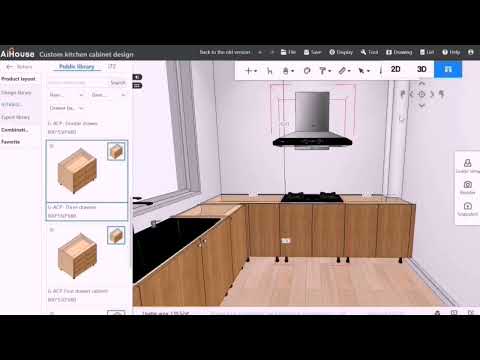
For intermediate to advanced users, SketchUp integrates with AI plugins that automate kitchen cabinet placement, suggest ergonomic clearances, and generate cost estimates based on material databases.
| Tool | Best For | AI Features | Price Range |
| Planner 5D | Beginners, homeowners | Layout suggestions, 3D rendering, style recommendations | Free – $10/month |
| KitchenDeploy | Professionals, contractors | Work triangle optimization, material estimation | Custom pricing |
| Homestyler | Visual learners, renters | Photo-based AI remodeling suggestions | Free – $15/month |
| SketchUp + AI Plugins | Advanced designers | Automated cabinet placement, ergonomic analysis | $119/year |
How to Get Started With AI Kitchen Design
If you are new to AI-powered kitchen planning, the process is simpler than you might think. Follow these steps to get started:
- Measure your space accurately. Use a tape measure or a laser distance meter to record the length, width, and ceiling height of your kitchen. Note the locations of windows, doors, plumbing, and electrical outlets.
- Choose your AI tool. Select a platform that matches your skill level and budget. Beginners should start with Planner 5D or Homestyler, while experienced designers may prefer SketchUp with AI plugins.
- Input your preferences. Most AI kitchen design tools will ask you questions about your preferred style, budget, must-have appliances, and storage needs. Answer these as honestly as possible — the better the input, the better the output.
- Review and refine generated layouts. The AI will present multiple layout options. Evaluate each one based on workflow efficiency, natural lighting, and your aesthetic preferences.
- Visualize in 3D. Use the rendering features to walk through your kitchen design virtually. This step helps you catch issues before any physical work begins.
- Share with professionals or contractors. Export your AI-generated design and use it as a collaborative reference with contractors, cabinet makers, or suppliers.
Benefits of Using AI for Kitchen Remodeling
The advantages of integrating artificial intelligence kitchen design into your remodeling project go well beyond convenience. Here are the most impactful benefits:
- Time savings: What traditionally took weeks of back-and-forth between designer and homeowner can now be accomplished in hours.
- Budget optimization: AI tools calculate material quantities automatically, reducing waste and preventing costly over-ordering.
- Ergonomic accuracy: AI algorithms factor in industry-standard clearances, countertop heights, and appliance placement to ensure a functional and comfortable workspace.
- Trend awareness: Many AI platforms are trained on millions of design projects and current trends, meaning your kitchen will feel modern and stylish.
- Accessibility: Homeowners no longer need to hire an expensive designer for a basic remodel. AI democratizes professional-quality kitchen planning.
Expert Tips for Getting the Best Results From AI Kitchen Planning
Even the most sophisticated AI kitchen design software benefits from strategic input. Here are expert-recommended tips to maximize the quality of your AI-generated designs:
- Provide accurate measurements. AI is only as good as the data you feed it. Even small measurement errors can lead to layouts that do not fit properly.
- Use high-quality reference images. If your tool supports image-based design, upload well-lit photos of your kitchen from multiple angles.
- Be specific about your needs. Instead of saying “I want a modern kitchen,” specify “I want an open-concept kitchen with island seating for four, quartz countertops, and soft-close cabinetry.”
- Iterate frequently. Treat AI as a collaborator, not a one-shot solution. Generate multiple versions, compare them side by side, and refine your inputs with each iteration.
- Combine AI with human expertise. The best results come from pairing AI-generated layouts with professional feedback. Use AI for ideation and a designer or contractor for final execution.
Common Mistakes to Avoid in AI Kitchen Design
While AI kitchen design tools are remarkably capable, there are pitfalls that even experienced users encounter:
- Ignoring plumbing and electrical constraints. AI can suggest the ideal island placement, but it may not account for the cost of relocating plumbing lines. Always verify feasibility with a contractor.
- Over-relying on automation. AI generates layouts based on algorithms, but your kitchen is unique. Do not accept the first suggestion without critical evaluation.
- Underestimating storage needs. Some AI tools prioritize aesthetics over functionality. Double-check that cabinet and pantry suggestions meet your actual storage requirements.
- Neglecting ventilation and lighting. A beautiful layout means little if the range hood cannot be properly vented or if task lighting is overlooked.
The Future of AI Kitchen Design
The trajectory of AI-powered kitchen planning is accelerating rapidly. Industry experts predict that within the next three to five years, AI kitchen design tools will incorporate augmented reality (AR) capabilities that allow homeowners to place virtual kitchen cabinets, appliances, and countertops directly into their actual space using a smartphone camera. Generative AI will also move beyond static layouts to create fully interactive, walkable kitchen environments with realistic material textures, dynamic lighting simulations, and even appliance performance predictions.
We are also seeing the emergence of conversational AI design assistants that can understand natural language commands. You will soon be able to say something like, “Give me a kitchen layout with an L-shaped island, a farmhouse sink, and warm wood tones,” and the AI will generate a complete design in real time. This level of automated kitchen layout intelligence is no longer science fiction — it is happening now.

Final Thoughts
AI kitchen design represents a genuine leap forward for homeowners and professionals alike. It makes kitchen planning faster, more affordable, and more accessible than ever before. Whether you are a complete beginner exploring your first remodel or a seasoned designer looking to boost productivity, AI kitchen design tools offer capabilities that were unimaginable just a few years ago. The key is to approach these tools as powerful assistants rather than replacements for human creativity and expertise. Use them to explore possibilities, refine your vision, and confidently plan a kitchen that is both beautiful and functional.
Frequently Asked Questions About AI Kitchen Design
1. How accurate is AI kitchen design software for small spaces?
AI kitchen design tools are remarkably accurate for small spaces when provided with precise measurements. Most platforms allow you to input dimensions down to the quarter inch, and their algorithms account for standard clearances and ergonomics. However, always verify the output with a professional, especially for compact layouts where every inch matters.
2. Can AI kitchen design tools work with existing kitchen photos?
Yes. Many leading AI kitchen design platforms, including Homestyler and Planner 5D, support photo-based input. You upload an image of your current kitchen, and the AI analyzes the space to suggest remodeling options, material choices, and layout improvements based on the existing architecture.
3. Is AI kitchen design cheaper than hiring a professional designer?
In most cases, yes. Many AI kitchen planning tools offer free tiers or affordable monthly subscriptions that cost significantly less than a professional designer’s hourly rate. However, for complex remodels involving structural changes, combining AI-generated plans with a professional designer’s review often yields the best value.
4. What is the best AI kitchen design tool for beginners?
Planner 5D and Homestyler are widely regarded as the best AI kitchen design tools for beginners. Both offer intuitive drag-and-drop interfaces, built-in AI suggestions, and photorealistic 3D rendering without requiring any technical expertise.
5. Can AI generate a full kitchen design with material and cost estimates?
Absolutely. Advanced AI kitchen design platforms like KitchenDeploy and SketchUp with AI plugins can generate comprehensive material lists and cost estimates alongside layout designs. This feature is particularly valuable for budgeting and communicating expectations with contractors.
6. Will AI replace human kitchen designers?
Unlikely in the foreseeable future. AI is an incredibly powerful tool for generating layouts, visualizing concepts, and optimizing workflows, but human designers bring creativity, contextual understanding, and problem-solving skills that AI cannot fully replicate. The most successful approach combines AI efficiency with human expertise.